Capturing thousands of leads in a no-signal arena - without losing one.
Offline-first PWA
Coconaut (shootout.kawalec.pl)
2026
Solo Full-Stack
At a glance
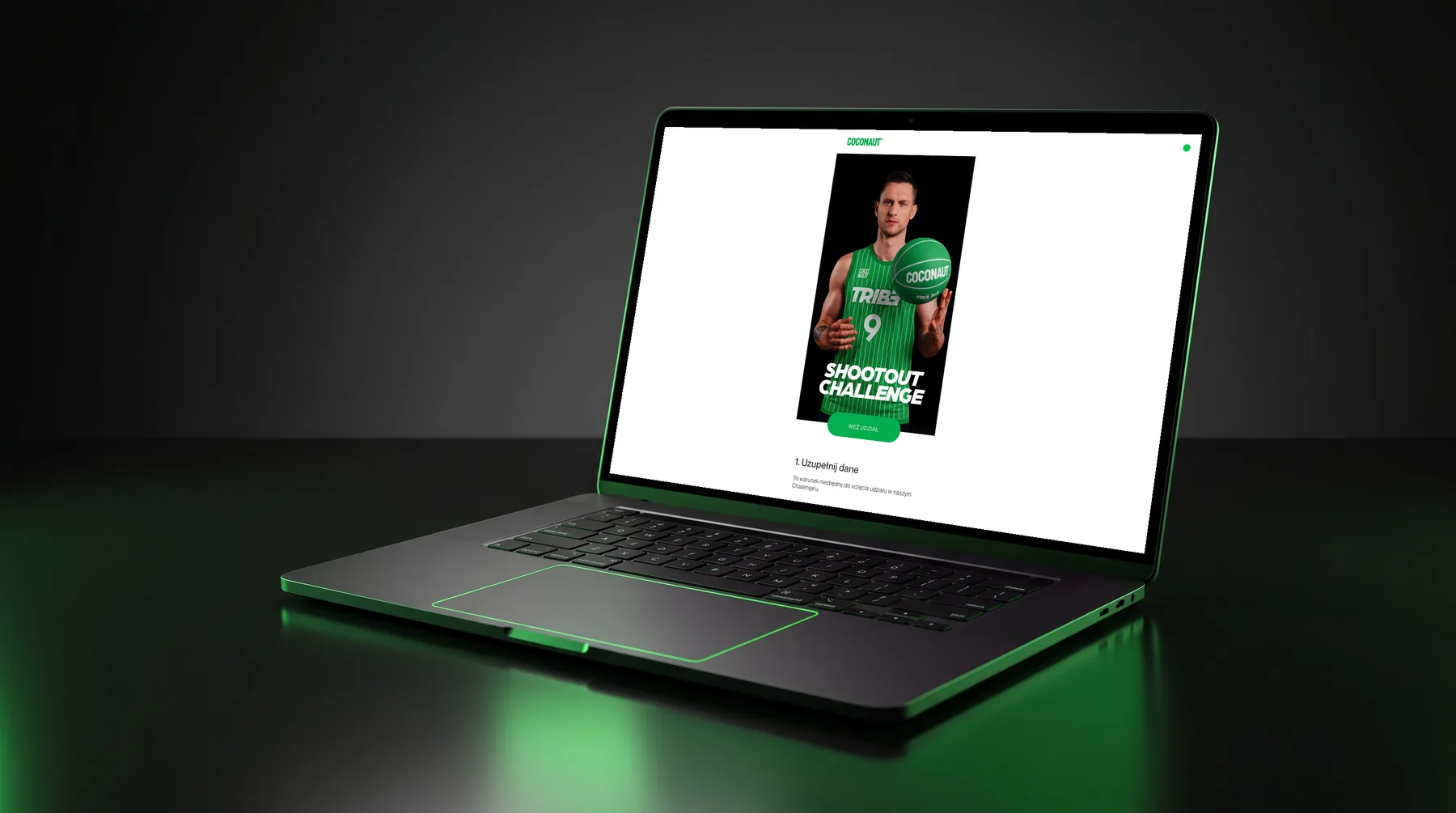
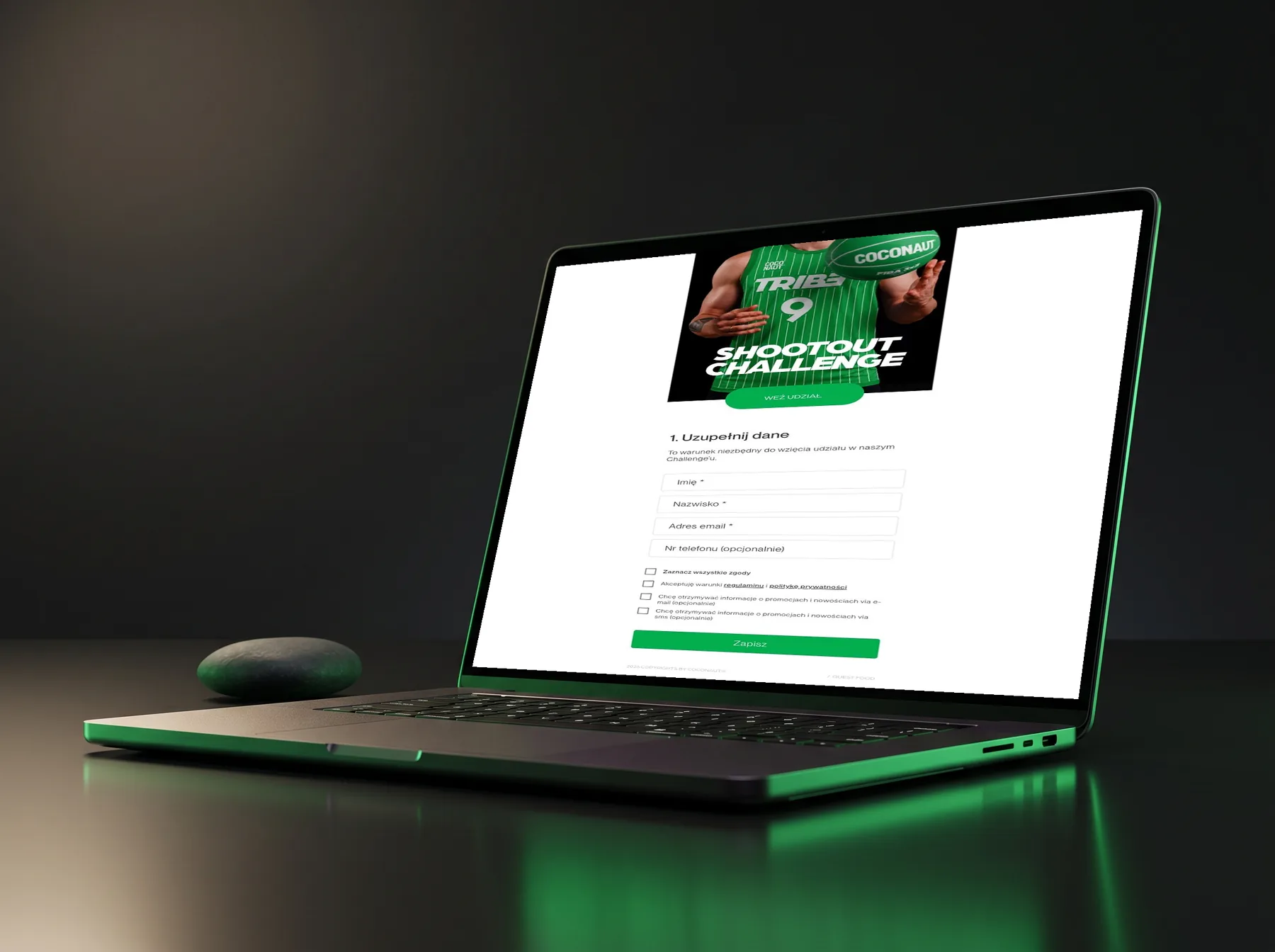
An offline-first lead-capture app for a 3x3 basketball event - every save lands on the iPad first, then syncs to the server whenever the network allows.
01 - The problem
A normal form is a data shredder in a packed arena.
Event lead-capture happens in the worst possible network conditions: a sold-out sports hall, hundreds of phones fighting for the same cell tower, and venue WiFi that folds the moment the doors open. A standard web form that only saves when you hit submit is exactly wrong for this - the request hangs, the hostess can’t wait, she moves to the next person, and the lead is gone before anyone notices.
Now multiply that by 10-20 iPads all collecting at the same time, over an event week, with a target of thousands of leads. “Mostly works” isn’t a strategy - every dropped submission is a real person who consented to be contacted and will never get the follow-up. The cost of a lost lead is asymmetric: it’s not a retry, it’s a permanent miss.
Coconaut needed something that behaves like a native app, not a web page: instant on tap, local-first, and completely indifferent to whether there’s a connection at that exact second. The network should be an optimisation, never a dependency.
02 - The vision
Save first, sync later. - the device is the database, for as long as it has to be.
Three principles drove every decision:
- Offline-first, always. The save never depends on the network. A lead is written to the iPad the instant the hostess hits “Zapisz”. Reaching the server is a separate, background concern - not a precondition for success.
- Zero data loss. Between “saved on the iPad” and “stored on the server” there must be no gap a lead can fall through. Duplicate-proof uploads, server-side checks and automatic device backups close every crack, including the browser wiping its own storage.
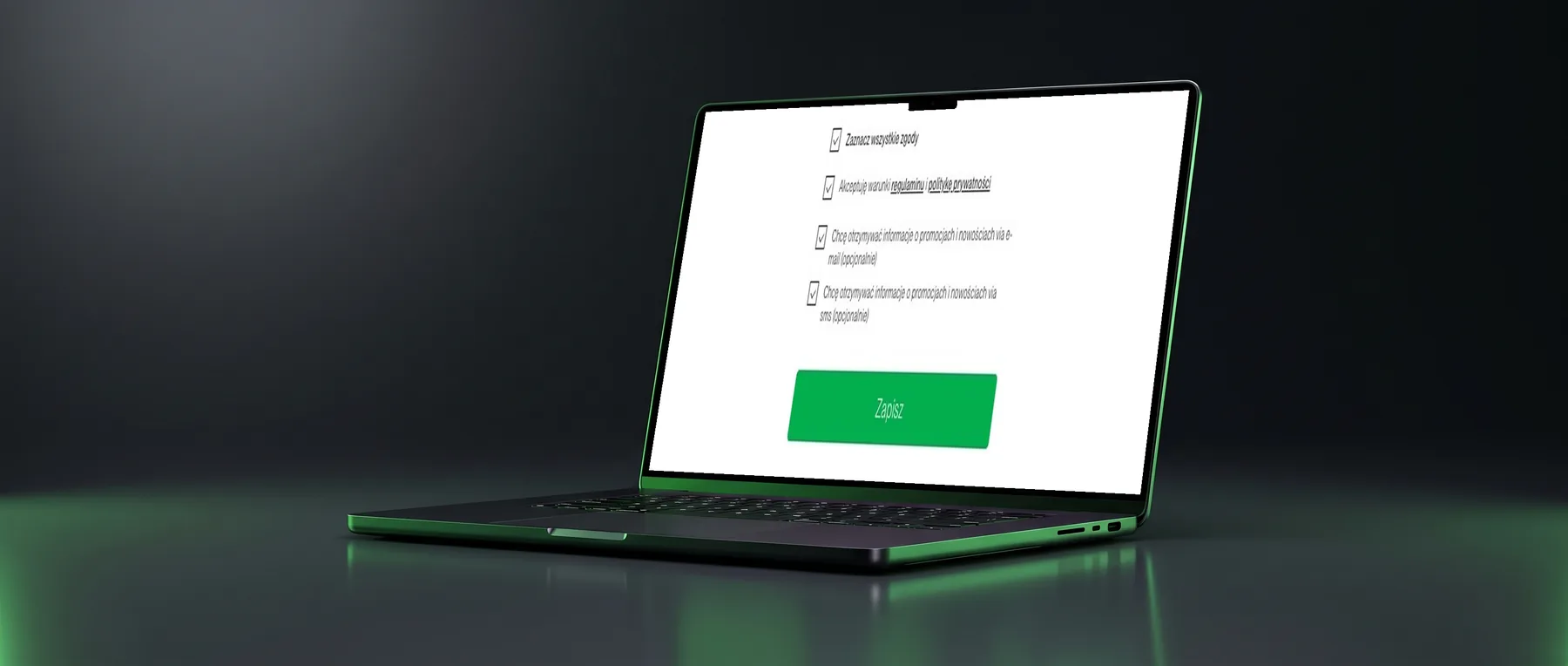
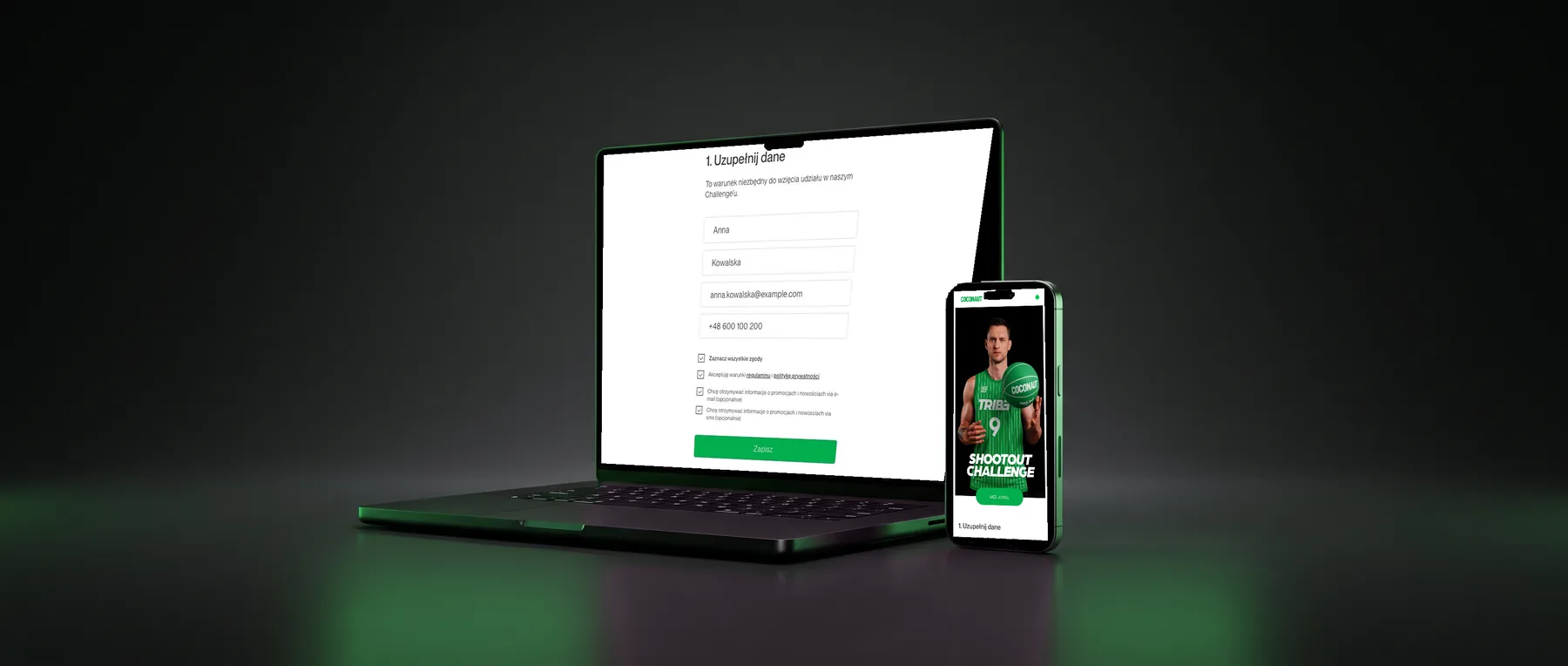
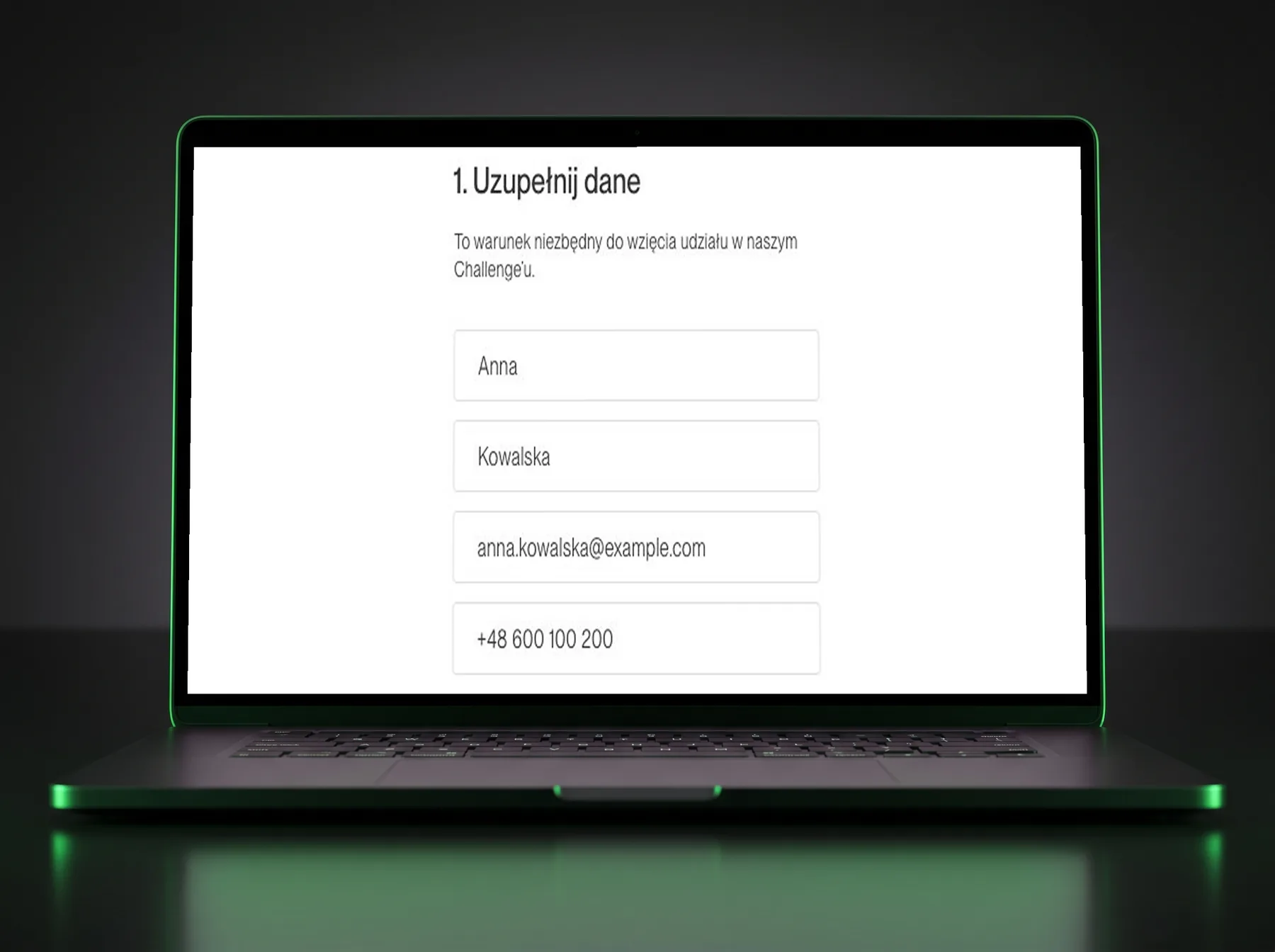
- Frictionless for the hostess. One screen, four fields, three RODO consents, a “Zapisz” that always succeeds. No login per lead, no spinner of doom, no “please try again”. The person at the booth never waits on a network.
03 - Who it’s for
Built for everyone who touches a lead between the booth and the CRM.
Event hostess
Works the floor on an iPad, often with no signal. Needs a form that saves instantly and never blocks her on the next person in the queue.
Event organizer
Owns the numbers. Wants every lead accounted for and a clean export at the end of the day - not a postmortem about what got lost in the hall.
Marketing / CRM
Consumes the leads afterwards for the mailing. Needs deduplicated emails with explicit RODO consents attached to each one.
Participant
The person at the booth. Gives their data once, accepts the terms, and expects it to “just work” in two taps - signal or no signal.
04 - Technology & the challenge
A modern app, one genuinely hard problem.
Coconaut Shootout is built to behave like a native app on every iPad - it installs to the home screen, opens instantly, and keeps working with no connection at all. Each lead is saved on the device the moment it is entered, and a background process quietly sends it up to the server whenever a signal is available. A small admin panel gives the organizer a live view of what has come in and a clean export at the end of the day.
The hard part was guaranteeing that not a single lead is ever lost. In a packed arena with no reliable network, on ten to twenty devices all collecting at once, the app has to save every entry locally first and treat the connection as a bonus rather than a requirement. Uploads are protected so the same lead can never be recorded twice, and each device backs up its own data to the server every few minutes - so even if a tablet drops out or clears its storage, the leads are already safe.
05 - The workflow
Fill. Save. Sync in the background.
For the hostess it is two taps: type the lead, hit save. Behind that button the app checks the details, stores the lead safely on the device, and immediately tries to send it on. With signal the lead reaches the server in seconds; without it, the lead waits safely on the device and the app keeps retrying on its own - on a timer, when the screen comes back into focus, and the moment the network returns. Nobody at the booth ever has to wait or try again.
06 - Feature highlights
What ships on every iPad.
Each piece exists to make one sentence true in a real arena: capture the lead, never lose it.
+ Live sync status
A simple green or red indicator tells the hostess at a glance whether everything is uploaded or still waiting on the device. When it reads “Wszystko zsynchronizowane”, it is safe to move on.
+ Automatic device backups
Every few minutes each iPad sends a full copy of its collected leads to the server, keeping the most recent backups per device - so even if a tablet clears its own storage, the leads survive.
07 - Results
Live, offline-proof, zero-loss by design.
Coconaut Shootout runs in production at shootout.kawalec.pl. Built in four days, it turns a hostile-network arena into a reliable lead-capture floor: every save is local-first, every upload is safe against duplicates, every device backs itself up.
Like what you see?
Let’s build the next one.
From a blank page to a working product - offline-first PWAs, AI, automation, full-stack engineering. Get in touch and let’s talk about your idea.